bbandonell | 08 May 2025
This article chronicles the legal and political ordeal surrounding the denial of ABS-CBN’s franchise. It argues that the denial was not a neutral application of law, but a calculated imposition of silence by sovereign power. In recounting the state’s use of legal formalities to enforce political ends, it exposes how the machinery of law can be weaponized not to adjudicate, but to suppress. This is the record of a democracy tested not by overt tyranny, but by procedural obedience.
There are times when the law, though dressed in its formal robes, serves not the majesty of justice but the temper of those who rule. The extinguishing of ABS-CBN’s franchise was not an accident of legal fate, nor the routine expiration of a statutory license. It was a performance—a calculated display of sovereign displeasure, executed not by sword but by silence, masked as legislative prudence. Beneath the noise of hearings and the shuffle of committee reports, there echoed only one voice—the voice of the one who sits not upon a bench, nor within the chamber, but upon a throne fashioned from fear.
The network was accused of many things, and defended against all. Bias in reporting, a charge as old as the printing press, was laid at its feet as though objectivity were ever a justiciable claim. The failure to offer shares to the public was cited, though no regulator had ever demanded it.1 Pay-per-view operations were called illicit, though permitted until suddenly they were not.2 Labor violations, that favorite cudgel of those who care little for laborers, were aired before a chamber that had no intention to redress but every intent to punish. Even the ownership of financial instruments that carried no voting rights was painted as treasonous.3 And above it all, the suspicion that a man born of the archipelago but also recognized by another nation could not be trusted with the truth.4
None of these were resolved in the courts. None were litigated to judgment. No penalty, fine, or ruling from any agency formed the basis of denial. They were not findings—they were pretexts. The outcome was never in doubt. The theater required only a script, and the players followed their roles. The throne had spoken its will many times before the curtain rose. This was no exercise of lawmaking; it was a declaration of dominion.
The punishment was not merely corporate. It was personal. Twenty thousand workers—anchors and audio men, janitors and journalists—lost not a platform but their means to live.5 Their children ate differently; their futures grew dimmer. In a land already fraught with displacement, where labor is cheap and voices cheaper, the silencing of a broadcast tower was felt like a funeral. Yet it was done without blood, without bars, without smoke. It was done with the stroke of a vote, the stillness of omission, and the grinning certainty that no one would answer for it.
One does not need to name the figure behind the curtain. He who governs with the cadence of vengeance, who calls adversaries vermin and truths inconvenience, is well known in any age. He is the shadow in every strongman’s silhouette, the smile behind every caged reporter. His tools are not always tanks or decrees; sometimes they are committees, technicalities, and timetables. And in his world, justice is a privilege of the loyal and speech a luxury of the mute.
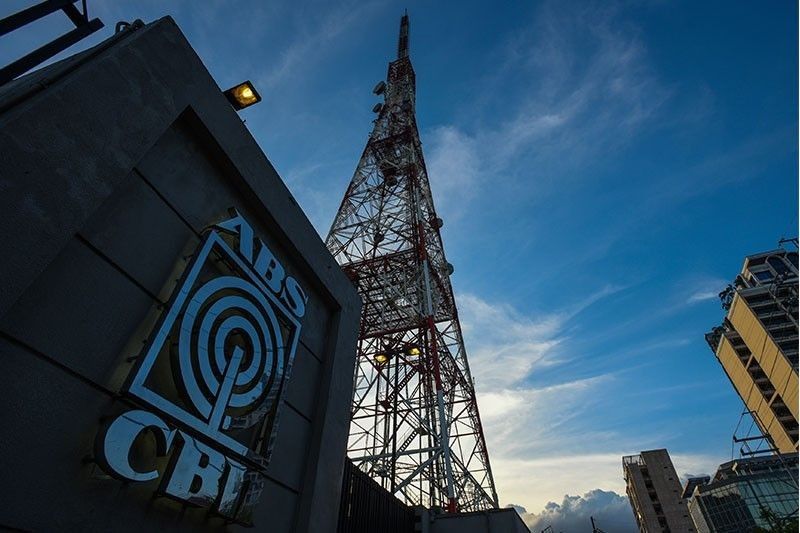
Yet even he must learn that law, when abused, is not easily tamed. For in seeking to erase, he provoked resilience. ABS-CBN, stripped of its broadcast license, did not wither. It adapted. From the rubble of regulation it rose as a digital phoenix, streaming to millions through platforms no frequency could contain.6 What was once a tower became a network without walls. Stripped of its place in the public spectrum, it claimed new territory in the realm of ideas. He who sought its ruin unwittingly authored its reinvention.
And time, always the patient clerk of justice, took note. The very hand that once signed threats now signs defenses. No throne is eternal; no power immune. In foreign forums where the laws of nations meet, inquiry has begun into what else that voice commanded—what other bodies, unseen, were made to fall.7 The halls that once echoed with boasts now grow quiet.
This episode will be remembered not because it was unique, but because it was precise. It showed how the instruments of law can be bent to music played by one conductor. It revealed that democracy’s erosion requires no storm—only a slow withdrawal of courage. And yet, it also offered something rare: the spectacle of an institution wounded but not broken. ABS-CBN lives, not because it was permitted to, but because it refused not to.
Justice Holmes taught that the law is experience, not logic. And this was the experience of a people watching power reach beyond its brief, of citizens learning that silence can be enforced in many forms, and of a press proving that truth does not require permission to endure. The vote that closed the network revealed less about ABS-CBN than about those who cast it. They sought to impress a ruler. Instead, they impressed history.
And history, as always, keeps a ledger.
__________________________________
Footnotes
- House of Representatives, Committee on Legislative Franchises, Report on the Denial of ABS-CBN Franchise Renewal (July 10, 2020). ↩︎
- National Telecommunications Commission (NTC), Cease and Desist Order against ABS-CBN TV Plus, May 2020. ↩︎
- Gamboa v. Teves, G.R. No. 176579, Oct. 9, 2012, 689 SCRA 365 (Phil.). ↩︎
- Department of Justice, Legal Opinion on Citizenship of Eugenio “Gabby” Lopez III, Aug. 2020. ↩︎
- ABS-CBN Corp., Statement on Employee Retrenchment, Aug. 2020; see also CNN Philippines, Thousands of ABS-CBN Workers Affected by Shutdown, July 2020. ↩︎
- ABS-CBN Corp., Digital Transformation and Streaming Expansion Report, 2021; see also Corporate Newsroom, ABS-CBN Launches Global Content Platform (Oct. 2021). ↩︎
- Int’l Crim. Ct., Statement of the Prosecutor on Developments in the Situation in the Republic of the Philippines, March 2025. ↩︎

