My mother’s kumare came over yesterday. You know the type — cheerful, talkative, always with chismis but usually harmless. She started by complaining about the senior citizen office in town. “Ang bagal, grabe,” she said, “pilang-pila, tapos wala pang clear instructions.” Classic government service story — we nod, we sigh, we sip coffee.
But then — and this is where it gets interesting — she proudly shared how she “solved” the problem. Apparently, she chatted up one of the staff, mentioned who she knew, dropped a few friendly hints about being related to someone in the barangay, and poof, papers processed in less than 10 minutes. She told the story like a small adventure. A win. A personal triumph.
And I found myself smiling politely — while my brain whispered:
There it is.
Ningas-Kugon wearing lipstick and charm.
We love to get angry at corruption in the abstract. We love to condemn “the system.” But when the inconvenience hits us personally, we are very, very quick to choose the shortcut. And because the shortcut worked, the story becomes a brag — not a shame.
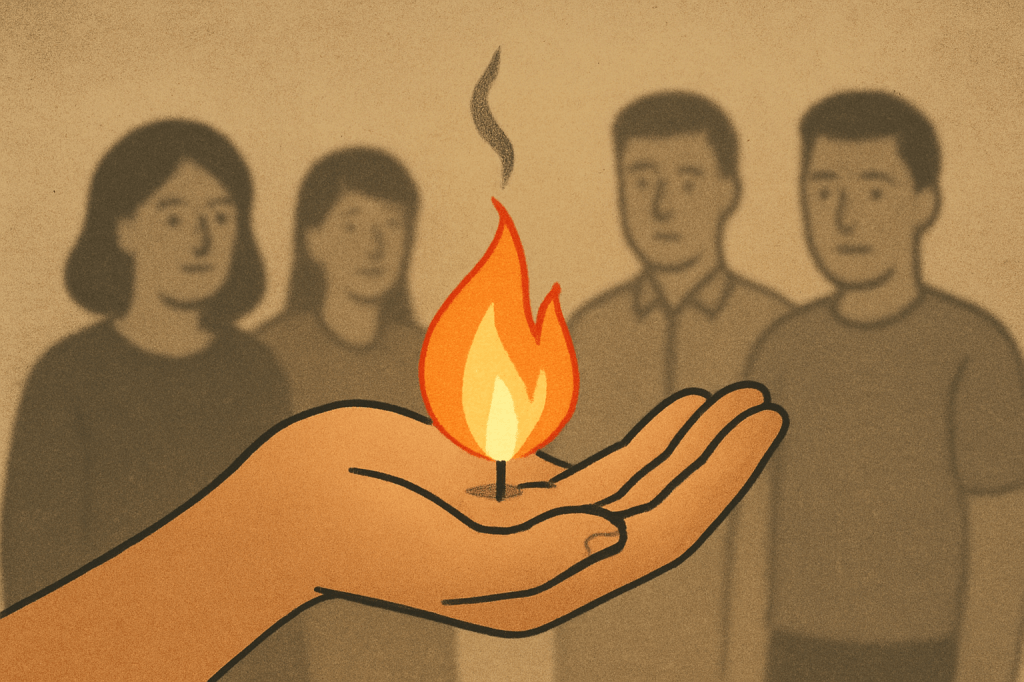
This, right here, is where the flame of righteous anger quietly dies.
We Filipinos are not short on emotion or conviction. We can mobilize in five minutes flat when there’s public drama. A trending hashtag? A viral exposé? A politician caught with a questionable bag collection? Suddenly we are a nation of prosecutors, moral philosophers, and unpaid political analysts.
But give us a long task—monitoring a local budget hearing, demanding procurement transparency, pushing a case for prosecution through years of appeals—and we wilt like kangkong in the sun.
We treat reform like a fiesta. It must be loud, inspiring, urgent, fueled by adrenaline and caffeine. And when the noise dies, so does the energy. It’s not that we don’t care. It’s that we’ve been conditioned to only care in bursts.
The problem is corruption does not operate in bursts. Corruption plays the long game. It waits. It exhausts. It survives outrage like it’s nothing because it knows we will get tired. It knows we’ll say things like:
“Wala namang mangyayari diyan.”
“Hayaan mo na, ganun talaga dito.”
“Bahala na si Lord.”
Corruption’s greatest weapon is not even secrecy—it’s our resignation.
We have seen this pattern so many times it’s practically choreography. Scandal breaks. Public shock. Senate hearing. Media frenzy. Moral outrage peaks. Then… life resumes. Case unresolved. Funds unreturned. Officials “recycled.” People shrug. The flame disappears. The lesson fades.
Ningas-Kugon makes corruption feel invincible because it turns every civic fight into a sprint when what we need is a marathon.
And let’s be honest: sustained civic engagement is boring. It is paperwork, minutes of meetings, budget breakdowns, legal follow-ups, dry reading, and waiting for institutions that move like syrup uphill. There is no applause for it. No dramatic payoff. No viral moment. Just slow, stubborn, unglamorous effort.
But that is exactly what real reform requires.
If we want to break this centuries-old machinery of patronage and plunder, we have to stop treating governance like a telenovela and start treating it like maintenance work. Less fireworks, more calendar reminders. Less performance outrage, more persistence. Less heroic moments, more ordinary discipline.
Resilience cannot just mean we survive corruption. That is not strength—that is endurance under abuse.
Real resilience is refusing to let the system stay broken.
It means:
- Showing up when no one is watching
- Demanding receipts
- Following up—again and again and again
- Holding the line even when the fire fades
The truth is we are not hopeless. We are simply tired. But tired people can still choose to continue. And that choice—quiet, unexciting, unglamorous—is what will save us.
If we can shift our cultural instinct from the rush of the spark to the warmth of the steady flame, then maybe, finally, we can build something that lasts.
Because the real revolution this country needs is not dramatic.
It is consistent.
(Thumbnail image created by Grok.)

