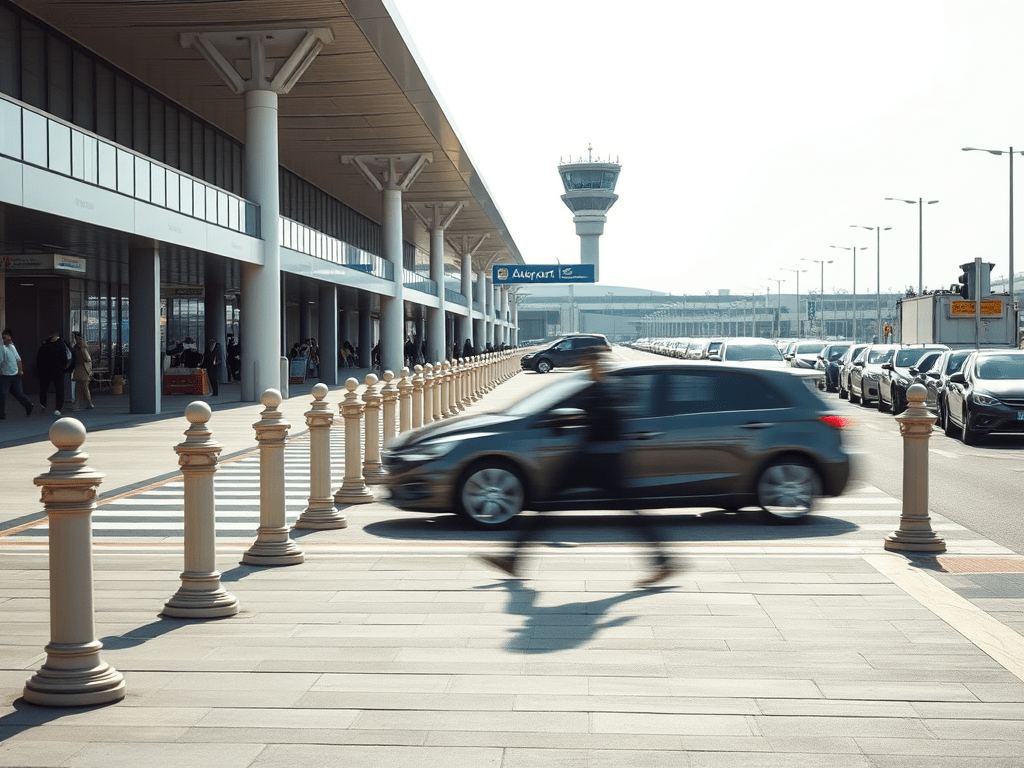
Let us not be naïve. An airport is not a roadside market or a countryside depot; it is a highly regulated, high-traffic, security-conscious environment where both governmental authorities and private entities are tasked with anticipating the dangers that their designs may invite. When a driver, in a fit of panic or human error, crashes into a pedestrian walkway — and the only thing standing between a vehicle and a human being is a feeble row of ornamental bollards — the question is not whether an airport operator should be liable. The question is: how did they ever think that was enough?
The Duty Owed by NAIA
Article 2176 of the Civil Code could not be plainer:
“Whoever by act or omission causes damage to another, there being fault or negligence, is obliged to pay for the damage done.”
This provision, the foundation of our tort law system, imposes liability on those who, by fault or negligence, cause injury to another — not merely by commission but also by omission, and most importantly, when a duty exists.
Now, does an airport operator owe a duty of care to pedestrians using its terminal walkways? Of course it does. It invites the public into its domain. It collects fees from every airline, vendor, and concessionaire operating within its premises — and indirectly from every ticket sold. In doing so, it assumes responsibility over the reasonably foreseeable safety risks to the public that it invites onto its property. This is not a novel proposition; it is settled doctrine in our jurisprudence that:
“A person is liable for damages caused to another by his act or omission, there being fault or negligence.” (Picart v. Smith, 37 Phil 809).
To suggest that the airport did not foresee the risk of vehicular encroachment — when it placed a walkway directly in front of a vehicular drop-off zone, lined up to face every vehicle’s front bumper — is either a dangerous ignorance or an indifference that borders on recklessness.
The Negligent Omission: Inadequate Safety Design
NAIA might claim they installed bollards. Perhaps they did. But to what effect? A piece of ornamental pipe sunk six inches into concrete is as useful against a speeding car as a plastic cone is against a flood. And when it comes to design negligence, our courts have spoken clearly: it is not enough to do something. The duty of care requires that you do enough — enough to meet the reasonable standard required to avert known dangers.
In Del Prado v. Meralco, G.R. No. 141788, Nov. 25, 2004, the Court held:
“Those who offer their services to the public are duty-bound to ensure that such service is rendered with due regard to safety.”
If bollards were not crash-tested, not embedded properly, or spaced in a way that allows easy vehicular penetration — they are not safety devices; they are aesthetic illusions masquerading as protection.
Proximate Cause and the Driver’s Acts
The defense will wave the usual flags: “intervening cause,” “efficient cause,” “driver’s fault.” But they forget that proximate cause in tort law does not ask whether the defendant was the last to act, but whether his act — or omission — set in motion a foreseeable chain of events that led to harm.
We are not concerned here with the bizarre or the miraculous. The idea that a driver may panic, faint, accelerate by mistake, or even act negligently is entirely foreseeable. That is why parking structures and embassies and even shopping malls now install crash-rated barriers, reinforced planters, setbacks, and serpentine lanes. We prepare for human error not because we excuse it — but because we anticipate it. That’s the very point of having a duty of care in design.
Caso Fortuito: A Misapplied Escape Hatch
The doctrine of caso fortuito — Article 1174 of the Civil Code — is not the convenient eject button that defendants so often believe it to be. It demands strict compliance:
The event must be unforeseeable, inevitable, and not aggravated by any human fault.
That last part matters. As the Court held in Sicam v. Jorge, G.R. No. 159617, March 14, 2008:
“Where the negligence of the obligor contributed to the loss, caso fortuito cannot be invoked.”
So even if the driver’s panic were sudden and unusual — which, in itself, is a factual question — the airport’s failure to install adequate protective infrastructure bars any invocation of fortuitous event. You cannot leave the doors open, install flimsy locks, and then blame the burglar.
Closing
Negligence is not merely the failure to act — it is the failure to act as one ought, in light of foreseeable risks. Here, the risk was foreseeable, the harm was severe, and the protections were inadequate. No amount of hindsight pleading or invocations of caso fortuito can erase the simple truth: the airport, in designing its facility, failed to uphold its legal duty to protect the lives of those it welcomed.
Accordingly, it is my opinion that liability under Article 2176 of the Civil Code may be properly imposed upon NAIA, and that the families of the victims are entitled to be made whole — not because they were in the wrong place, but because the defendants failed to make it a safe one.
(To be continued… Part II will look into the ‘dissenting opinion’.)
_____________
Disclaimer
Please read this disclaimer carefully.
This “Case & Matter Analysis” is prepared for educational purposes only and should not be considered legal advice. It is a preliminary analysis based on a hypothetical fact pattern and general principles of Philippine law.
This analysis does not constitute an attorney-client relationship, and the information provided herein should not be relied upon as a substitute for consultation with a qualified legal professional licensed in the Philippines.
The application of legal principles can vary significantly based on the specific facts and circumstances of a case, as well as changes in legislation and jurisprudence. This analysis is based on the law as understood on the date of its preparation and may not reflect the most current legal developments.
No action should be taken or refrained from being taken based solely on the information presented in this analysis. For advice regarding your specific legal situation, you are urged to consult with a competent attorney who can analyze the particular facts of your case and apply the relevant law accordingly.
The author of this analysis assumes no responsibility for any actions taken or not taken based on the information provided herein.

