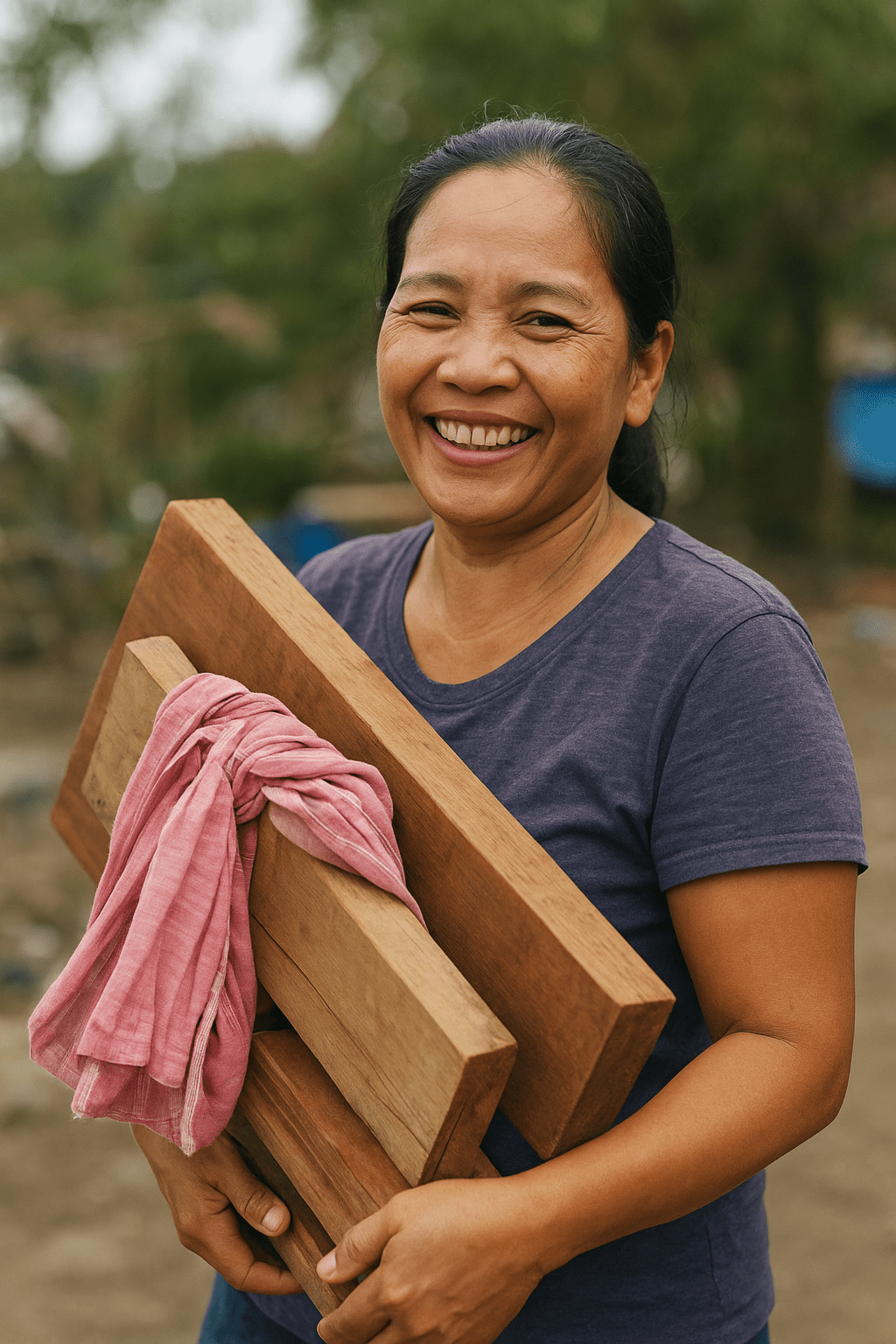
I was watching the news the other day about Typhoon Tino making its way through Cebu province. The usual scene unfolded: an evacuation center, scattered belongings, families trying to salvage what they could. The reporter stopped to speak with a middle-aged woman carrying a bundle of clothes and kitchenware—everything she managed to save before the flood came in. And through all of this, she was smiling. Not a forced smile, not nervous laughter—just the familiar Filipino lightness we’ve all grown used to seeing. The kind of smile that seems to say, “Kaya pa. Tiyaga lang.”
We are told this is resilience. And to be fair, it is. It’s powerful, it’s admirable, and it has carried us through everything from natural disasters to political upheaval. Filipinos endure. We rebuild. We adjust. We laugh. And the world claps its hands and says, “Filipinos are incredible.”
But as I watched her, I felt something uneasy underneath that praise. Because alongside our resilience sits a quiet question we rarely confront: If we can withstand so much, why do we keep tolerating the conditions that require so much resilience in the first place?
Why do we keep re-electing the same officials who allow communities like hers to remain vulnerable—year after year, typhoon after typhoon? Why do we settle for temporary relief goods instead of demanding durable flood control, transparent disaster funds, and actual enforcement of building standards? Why does our outrage at corruption surge for a day online, only to evaporate just as quickly?
I don’t think this is because Filipinos are apathetic, or blind, or foolish. Quite the opposite—we’re emotionally intelligent, socially aware, and deeply attuned to one another. But the political system has learned to exploit the very cultural values that make us who we are.
Take Kapwa—our instinct for shared identity. It’s why neighbors share food even when they barely have enough, why communities organize themselves when government response is late. But in politics, kapwa becomes utang na loob. Patronage. “He helped us, so we owe him.” Vote not for the one who will fix the problem, but for the one who gives the most during the crisis the system itself created.
Then there’s Hiya—our desire to maintain harmony. We avoid confrontation because we don’t want to appear rude, arrogant, or ungrateful. Even when we know something is wrong, we swallow it. We don’t want to be that person—the one who disrupts the flow, who calls out the mayor, who demands receipts.
And Ningas-Kugon—the intense flare of passion that burns bright and dies fast. Our anger peaks quickly, then fades. A scandal breaks, we rant for a week, then the news cycle resets. The politician issues a statement, maybe a prayer, maybe tears. The public sighs. Life moves on. Until the next flood, the next misuse of funds, the next tragedy we are expected to smile through.
Here is the uncomfortable truth: politicians know we are resilient—and they rely on it.
They know that no matter what they fail to do, the Filipino will find a way to cope. The barangay will organize. The kapitbahay will share rice. The OFW sibling will send money. The family will rebuild with bare hands if they have to.
So the politician does not feel the urgency to govern well. He already knows the people will save themselves.
The woman in Cebu will recover. She will sweep mud out of her kitchen. She will wash and rewash what she saved. She will smile again on camera when the next storm comes. And the same politicians will send sacks of rice stamped with their faces, and the cycle will quietly, politely continue.
This is the paradox: our ability to endure has become both our strength and our trap.
We are so good at surviving hardship that we have forgotten we deserve to stop surviving and start living. We hold on to resilience like it is the highest virtue—when in truth, the greatest act of resilience now may be to refuse to settle for mere endurance.
Maybe the question we need to ask is this:
What would happen if we applied the same courage we show in calamity to the slow, steady work of fixing the system itself?
Because we already know we can withstand the storm.
Now the challenge is learning how to demand a world where we don’t need to.
(Thumbnail image created by Grok.)

