(The decision-style format used in the accompanying piece is a literary device—nothing more. I do not speak as a judge, nor do I claim any judicial authority. I adopt the tone of a court opinion because it offers a disciplined framework for examining a politically charged question: What does the Constitution actually require when a President is accused of grave wrongdoing?
The judicial voice forces a certain rigour. It strips away drama and refuses shortcuts. It demands that every argument be tied to text, structure, and principle—not to volume, sentiment, or shifting political winds. In moments when public debate is driven by outrage and rumour, the judicial register becomes a useful tool: it slows the conversation down, forces clarity, and insists on constitutional fidelity.
This article uses that style to illuminate the issue, not to impersonate a tribunal. The aim is simple: to show that even under the most disciplined and exacting lens—the constitutional lens—the same conclusion emerges. Process matters. Truth matters. And the remedies we seek must remain within the bounds of the fundamental law.)
The question presented is plain and stark: when allegations of large-scale misappropriation of public funds press upon the Presidency, what answer does the Constitution supply? Does popular clamour manufacture a constitutional remedy? Or does the Constitution itself, with its chosen instruments and deliberate design, supply the remedy — and only that remedy? The answer is the latter. The Constitution is not an elegy to sentiment; it is a rulebook. The removal of a sitting Head of State is the most destabilising act a republic may authorise. The Framers did not leave such a matter to the weather of public emotions; they prescribed a procedure—impeachment—and no substitute. To substitute passion for procedure is to annul the document that governs us.
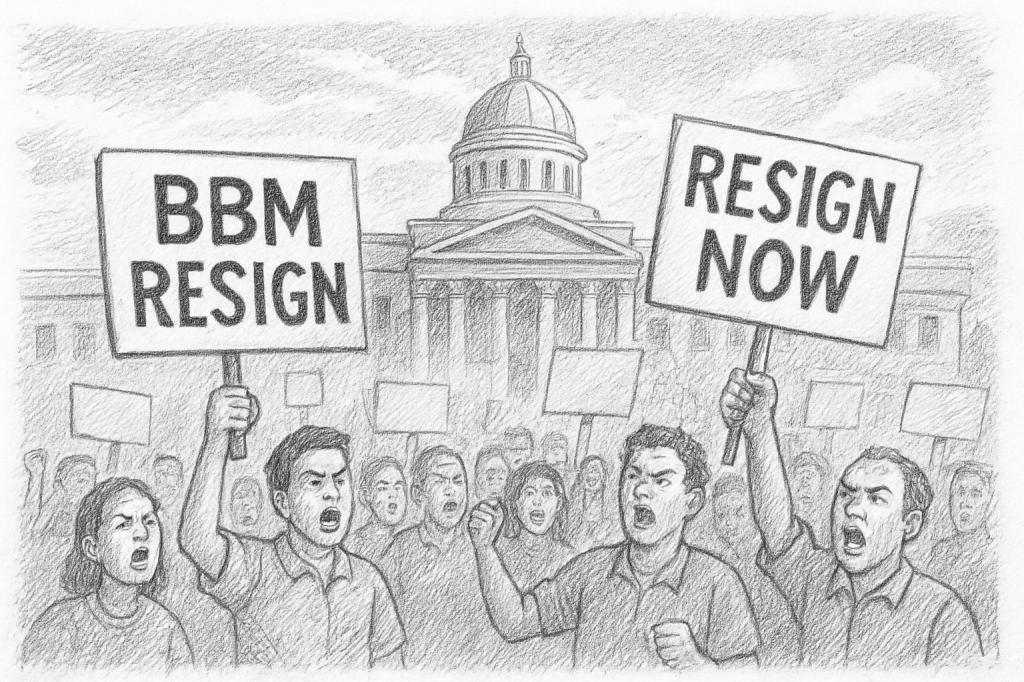
Resignation occupies a different category. A conscious abdication of office, voluntarily tendered by an occupant moved by conscience or prudence, is a lawful and legitimate way to leave power; it is departure, not removal. Resignation is the occupant’s act, dictated by moral conviction or political calculation; it does not and cannot properly be coerced into a surrogate for the constitutional mechanism for removal. A President who resigns of his own will alters the political fact on the ground but does not alter the constitutional rule: resignation is not a substitute for impeachment, nor may public clamour be transmuted into a constitutional instrument by fiat.
We write, therefore, with two commitments: fidelity to the text, and fidelity to the structural logic the text embodies — stability through deliberate process; accountability through defined means. The allegations before us are grave, and the public’s anger is real. But anger and gravity do not expand constitutional power; they summon it. The Constitution, in clear and exclusive terms, fixes the method of removing the President. It vests the Legislature with the impeachment power and vests the people, through their representatives, with the responsibility and burden of judgment. Textualism does not permit judicially created substitutes. When the document delegates high-stakes action to specific branches, the Court has no license to improvise. Procedure matters because the function of procedure is to minimise the risk that passion, faction, or faction-leaders will displace deliberation and evidence.
To argue that extraordinary alleged corruption suspends the impeachment requirement is to argue that the document bows to emotion. That argument is incompatible with the text and with the design of a republic. The Constitution is intended to be a hard constraint where passions run high.
The Legislature’s failure to reach a particular result is not, and cannot be treated as, a constitutional nullity. That the people’s chosen representatives may be cowardly, conflicted, or otherwise incapable of mustering a supermajority does not rewrite the Constitution; it reveals a democratic imperfection of human design. Those imperfections—brought about by popular choice and political incentives—are baked into the system by design, not by accident. They are the price of a republic that prefers deliberation and consensus to the ephemeral triumph of rage. Recognise the flaw, if you will, but the Constitution presumes the citizenry will elect representatives who can be persuaded; it does not presume perfection. The remedy for systemic political failure is political, not judicial recalibration.
Constitutional textuality is not pedantry; it is protection. Separation of powers, supermajority requirements for removal, and distributed investigative responsibilities serve a simple function: make removal difficult enough that it cannot be used at will, and possible enough that it will be available when warranted. The Framers assumed human fallibility—of rulers and of the ruled. They assumed faction. They created filters such as legislative deliberation, evidentiary standards, and inter-branch checks to prevent two errors equally pernicious—removal when unwarranted, and impunity when proven. If the people’s remedy becomes the square of the plaza and the loudest cry, the filters are stripped away and the Presidency is left to the mercy of rumour and the tide of demonstration. That is precisely the result the Constitution forbids.
We are not rhetoricians. We are judges. Our duty is not to inflame moral outrage but to interpret the Constitution as written. Two consequences follow. First, insist that the Article-prescribed mechanism be followed—fully, fairly, and with deliberate promptness. If the Legislature fails to act, that failure is not cured by a court decree that substitutes resignation for impeachment. If the people want a different rule, the Constitution itself provides amendment routes. Courts do not revise the allocation of power because the moment is ugly. Second, while courts must not invent removal mechanisms, they must insist on lawful process elsewhere. Where statutory institutions exist to investigate and prosecute—Ombudsman, prosecutorial offices, audit organs—the Court will require that those organs be permitted to perform their duties unimpaired by executive obstruction.
We will not transform the Judiciary into an instrument for political purges. We will, however, declare and enforce the limits of executive privilege, obstruction, and the duty to cooperate with independent legal processes. The allegations before us—drawn from media reports, whistleblowers, and investigative journalism—furnish probable cause, in the common-law sense, that inquiry at the highest level is necessary. Probable cause does not convict; it permits process. Process requires access to evidence. The principal impediment to meaningful process is executive-controlled insulation such as claims of absolute privilege, unilateral appointment of “independent” commissions that answer to the appointing power, and the perpetual invocation of national security, confidentiality, or administrative secrecy to shield documents and witnesses. These devices, if unchecked, convert a purported probe into a paper tiger. Consequently, the remedy we prescribe is not removal without procedure but a judicially enforceable command to open channels of legitimate inquiry.
Within the limits the Constitution permits the Court, we order coordinated, text-based measures, addressed to each branch of government towards the common aim of truthful exposure and institutional integrity. To the Executive we say: produce. Within seventy-two hours of this opinion, the President shall publicly and specifically waive claims of executive privilege and similar immunities to the extent necessary to permit the Ombudsman and a court-appointed, insulated prosecutorial office to receive and examine documents, memoranda, communications, and records materially relevant to the investigation of flood-control appropriations and any allegedly related transfers. Production shall be to a neutral custodian designated by the Ombudsman and subject to court oversight for disputes. The President shall not shelter documents behind blanket assertions of secrecy; where legitimately sensitive material arises, the courts may entertain narrowly tailored protective orders, but general invocations of secrecy will not be tolerated as a talisman against inquiry.
To the courts we say: assist. The judiciary shall oversee disputes about production and privilege, apply strict standards to claims of confidentiality, and enforce compliance with production orders. Where obstruction occurs—overt refusal, spoliation, or misuse of privilege—the judiciary will impose contempt sanctions and record the facts for political fora. Judicial authority to adjudicate claims of privilege and to enforce production is neither novel nor excessive; it is the functional core of the rule of law.
To the Legislature we say: act where you alone may act. The present scandal exposes structural defects that no court order can fully remedy. The Legislature must address them: curb discretionary budget insertions; reinforce statutory protections for prosecutorial independence; enact meaningful campaign-finance and anti-dynasty measures that reduce concentrated political power; accelerate audit procedures and require real-time disclosure for large public-works appropriations. These reforms are political in nature and political in remedy. They are the work of the people’s representatives, and no judicial substitute will do.
Two objections will be raised and should be answered now. First: “This Court is compelling resignation without impeachment.” It is not. We compel no resignation. We compel production and the creation of an insulated prosecutorial path. These are process measures that preserve the Constitution’s allocation of removal power while ensuring that substantive accusations will not be smothered by procedural fog. A President who complies with transparency and subjects himself to an independent, adversarial process—and who is thereby vindicated—will have strengthened constitutional order. Compliance strengthens the office; evasion corrodes it.
Second: “This is judicial overreach into the executive.” Not so. When the executive obstructs lawful inquiry, courts have always possessed the authority to enforce compliance with statutory obligations and to adjudicate privilege claims. The present order is the exercise of that venerable judicial function, not its abdication. The judiciary does not reach for policy prerogatives; it enforces law. Where the executive seeks to preclude the legal processes Congress has provided, the judiciary must step in to ensure those processes operate.
A final, plain word to the President and to the citizenry. The Court will not manufacture removal. It will not declare guilt in the press. But it will not be complicit in entrenchment through secrecy. If the President refuses to comply with the limited, textual commands above—if he seeks to sustain an administrative veil that precludes independent inquiry—that refusal will be recorded and will be a political fact of consequence. History will note it. The Legislature, when it recovers courage, will note it. The people, at the ballot box and in civic judgment, will note it. We do not threaten; we describe effect. A refusal to permit lawful, independent investigation is not exculpatory; it is evidence to be weighed in the fora the Constitution provides.
The Republic is not served by judicial theatrics or by mob-instigated coups against constitutional process. The remedy for a President who has sinned—whether by crime or by venality—is accountability according to law. The Framers chose procedure over emotions; we will honour their choice. Let the facts be unearthed by institutions designed for that purpose; let guilt or innocence be resolved by competent adjudication; let removal await the constitutionally prescribed instruments.
(Image is AI-generated. Texts are AI-assisted using Grammerly.)

